
A deep base of family-owned businesses, a looming succession crisis, and an underserved lower middle market made NEPA the right place to build AMDG Advisors from the ground up.
Scranton is not where most people expect to find a sell-side M&A advisory firm. That’s precisely the point.
For decades, founders and family business owners across Northeast Pennsylvania have had limited options when it came time to think about succession, value creation, or an eventual sale. The big investment banks don’t come to Wilkes-Barre. The national M&A platforms are focused on Philadelphia, New York, or markets with higher deal volumes and larger transaction sizes.
That gap is exactly why AMDG Advisors exists.
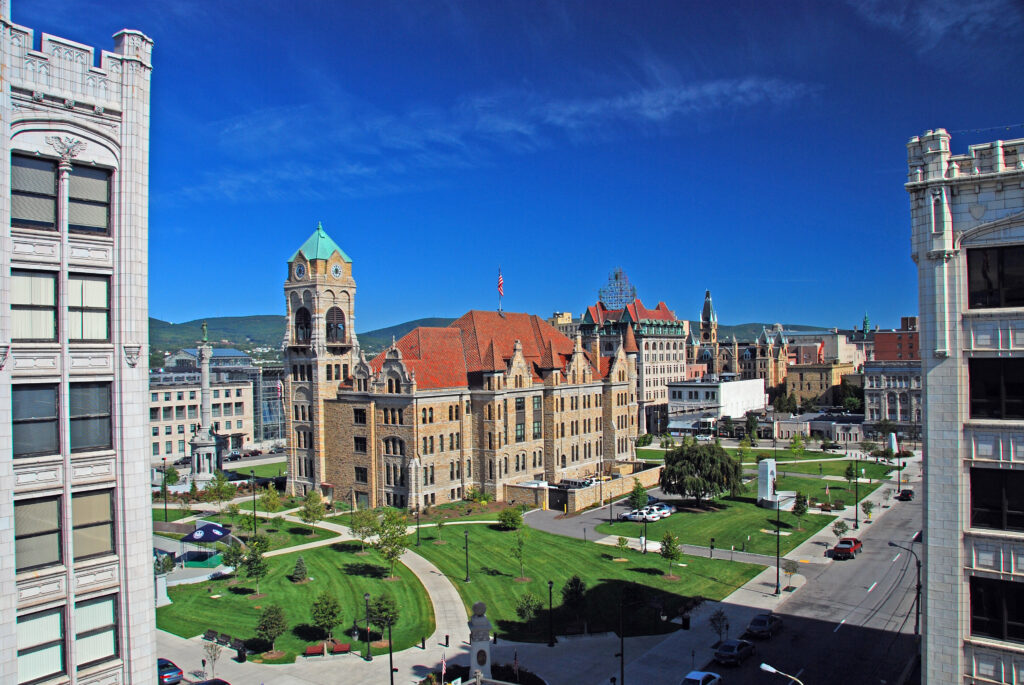
A Market Built on Multi-Generational Enterprise
Northeast Pennsylvania’s economy was built by families. Manufacturing. Distribution. Home services. Specialty retail. These aren’t Silicon Valley startups chasing venture capital—they’re businesses that have been paying employees, serving customers, and reinvesting in their communities for twenty, thirty, sometimes fifty years.
Greater Scranton is home to a diversified economic base spanning healthcare, logistics, manufacturing, and back-office operations. The region sits within a two-hour drive of Philadelphia, New York, and Northern New Jersey, with five major interstates converging in the area. That strategic position has attracted national logistics players like Chewy and Amazon, but it also supports something more important to the advisory work we do: a deep concentration of privately held, founder-led companies that are approaching transition.
Many of these owners are now in their late fifties or sixties. They’ve spent their careers building value, often without ever receiving a formal valuation or having a serious conversation about what comes next.
The Silent Succession Crisis
What makes NEPA particularly compelling—and urgent—for this type of advisory work is a statistic that should give every business owner pause: 59% of Pennsylvania business owner heirs do not intend to take over the family business. That’s higher than the national average of 51%.
Nearly half of those heirs say their parents have never discussed succession plans with them.
This isn’t a hypothetical problem. It’s happening now, quietly, across Lackawanna, Luzerne, and Wyoming counties. Owners are getting older. Their children have pursued different careers, moved to different cities, or simply don’t want the weight of running the family business. Without a plan, these companies face three outcomes: a distressed sale, a liquidation, or a slow decline.
None of those outcomes honors the work the founder put in.
Why the Lower Middle Market Needs Local Presence
The lower middle market—companies with $2 million to $15 million in revenue—is fundamentally different from the deals you read about in the Wall Street Journal. These aren’t public companies with boards of directors and investor relations teams. They’re businesses where the owner still answers the phone, where the employees know the founder’s kids, where the company’s identity is inseparable from the person who built it.
Advising these owners requires more than spreadsheets and transaction checklists. It requires presence.
You have to show up. You have to walk the floor. You have to sit across the table and understand not just the EBITDA but the story—why the founder started the business, what they’re proud of, what they’re worried about, what kind of buyer would actually protect what they’ve built.
That’s hard to do from Philadelphia. It’s impossible to do from New York.
Building a Practice Around Relationships, Not Transactions
AMDG Advisors was built around a simple premise: the best outcomes come from long-term advisory relationships, not one-off transactions.
That means spending time with business owners before they’re ready to sell. It means helping them understand what drives value in their industry, what buyers actually look for, and what they can do today to improve their position tomorrow. It means being a resource to the CPAs, wealth advisors, and estate attorneys who work with these owners every day—because those professionals are often the first to know when a founder is thinking about transition.
The goal isn’t to close deals. The goal is to become a trusted advisor to the owner—to help them build a more valuable, more transferable business regardless of when they decide to sell.
Coming Home to Give Back
I grew up in Northeast Pennsylvania. I went to Scranton Prep, then the University of Scranton. I know these communities. I know the families who built businesses here, the values that shaped them, and the pride that comes with building something that lasts.
After college, I did what a lot of NEPA kids do—I moved to Philadelphia to build a career. I spent years in Big 4 transaction advisory services at PwC, then moved through CFGI and RSM, doing Quality of Earnings work on the buy-side. That’s the financial due diligence that tells a buyer whether a company’s numbers are real. I learned what buyers scrutinize, what raises red flags, what makes a deal fall apart in diligence—and more importantly, what preparation looks like when it’s done right.
From there, I helped build an M&A advisory practice at a regional accounting firm. I saw how deals actually get done in the lower middle market, where relationships matter more than pitch decks and where understanding a founder’s story is as important as understanding their financials.
But the whole time, I kept thinking about home—and what I could give back.
The businesses I grew up around—the contractors, the distributors, the specialty shops that anchored Main Streets across the Wyoming Valley—those owners gave me my first jobs, sponsored my little league teams, and showed me what it looked like to build something real. Now those same owners are approaching retirement, and they deserve the same caliber of advice that founders in Philadelphia or New York can access. They just didn’t have it. The institutional M&A world had written off NEPA as too small, too regional, not worth the drive up I-81.
That’s why I came back. Not just to build a practice—but to give back to the community that shaped me.
AMDG Advisors isn’t a Philadelphia firm with a Scranton outpost. It’s a NEPA firm, built by someone who understands these communities because I’m from here. The technical skills I developed in Philadelphia—the Big 4 rigor, the QofE discipline, the deal experience—those are tools I brought home to serve the market that raised me.
Being a CPA matters in this work. The lower middle market is full of companies with messy books, owner-centric adjustments, and financial statements that don’t tell the full story of value. Founders need an advisor who can translate between what the numbers say and what the business is actually worth—and who can prepare the company to withstand the kind of scrutiny sophisticated buyers bring.
The Industries That Define NEPA
The verticals that matter most in Northeast Pennsylvania aren’t abstract. They’re concrete.
Home Services. HVAC, plumbing, electrical, pest control. These are recession-resistant, essential businesses with strong recurring revenue characteristics. Private equity has been consolidating these sectors aggressively, but many NEPA owners don’t know that buyers are actively looking in their markets.
Manufacturing. The region has deep roots in precision manufacturing, metal fabrication, and specialty production. These companies often have long customer relationships, proprietary processes, and defensible positions in niche markets.
Distribution and Logistics. Scranton’s position in the Northeast Corridor makes it a natural hub for warehousing and distribution. Family-owned distributors serving regional markets are increasingly attractive acquisition targets for larger players looking to expand geographic coverage.
Specialty Retail. From musical instruments to luxury goods to niche wholesale, NEPA has companies that have built real brand equity in their categories. The transition path for these businesses is more complex, but the value is often underappreciated.
The Referral Network That Makes It Work
No advisor succeeds alone. In the lower middle market, the most important relationships aren’t with buyers—they’re with the professionals who already have the trust of business owners.
That means CPAs who see the financials every year. Wealth advisors who understand the founder’s retirement picture. Estate attorneys who know the family dynamics and succession planning gaps. These professionals often see the warning signs before the owner does: a founder whose health is declining, a business that’s becoming too dependent on one customer, a family where the next generation has checked out.
Part of what I’ve been building at AMDG is a regional network of these professionals—not as referral sources in a transactional sense, but as partners in helping business owners make better decisions earlier. When a CPA in Wilkes-Barre calls me to ask whether their client’s business is saleable, I want to be able to give them a real answer, not a sales pitch.
What Makes Face-to-Face Essential
There’s a reason I came back to NEPA instead of staying in Philadelphia.
The lower middle market is local. Trust is local. The decision to sell a business—a decision that affects employees, customers, legacy, identity—is not made over Zoom calls with a banker you’ve never met.
Being here means I can have lunch with an owner in Scranton, tour a facility in Hazleton, and meet with an attorney in Wilkes-Barre—all in the same week. It means I’m at the Chamber events, the Friendly Sons dinners, the community functions where business owners actually talk to each other. It means when a founder has a question about selling their business, they’re not calling a 1-800 number—they’re calling someone who grew up down the road, who understands what it means to build something in this region.
That local credibility isn’t something you can manufacture from two hours away. You either have roots here, or you don’t.
Why Now
The timing for this kind of advisory work in NEPA has never been better—or more urgent.
Baby Boomer business owners are aging out of their companies. Private equity is sitting on record levels of dry powder, searching for quality assets in fragmented industries. Strategic buyers are looking to expand footprints in underserved geographies. And the lower middle market remains one of the most inefficient deal environments in the country—too small for the big banks, too complex for business brokers who treat transactions like real estate.
Meanwhile, the professional infrastructure for this work barely exists in the region. Owners who want sophisticated advice have historically had to go to Philadelphia or accept whatever help they could find locally.
That’s changing.
A Long-Term Commitment
I didn’t come home to do a few deals and leave. I came back because the community that raised me deserves the kind of M&A advisory that business owners in larger markets take for granted—relationship-driven, preparation-focused, and grounded in the realities of how lower middle market deals actually work.
The founders and family businesses that built this region—the same kinds of businesses that gave me my start, that shaped my understanding of what work and community mean—deserve better than a rushed transaction with an advisor who doesn’t understand their business or their market. They deserve a partner who will help them build value, plan for succession, and find the right buyer when the time comes.
I left NEPA to learn how to do this work at the highest level. I came back to bring that expertise home and give back to the community that gave me so much.
That’s what AMDG is here to provide.
Nicholas D’Andrea, Managing Partner, AMDG Advisors LLC
For founders and privately held business owners across Northeast Pennsylvania who are thinking about value creation, succession planning, or an eventual exit—whether that’s in two years or ten—I’d welcome the conversation.
Phone: (215) 578-7597 Email: Nicholas.dandrea@amdgadvisors.com